Wednesday, February 27, 2019

Employment Practices Liability Insurance: Crucial for Small Businesses

According to a recent study, more than half of all claims filed for employment-related liabilities are against employers with fewer than 50 employees. Alarmingly, the study also reveals that not even 2 percent of small businesses have employment practices liability (EPL) coverage.

High Price Tag of NYC Employment Practices Liability Insurance

Employment-related claims can be extremely costly, especially in cases that drag on for years. With a slow economy and increasing adoption of worker-friendly laws, these cases are on the rise—in fact, discrimination claims have increased significantly in the last 20 years. According to data from the Equal Employment Opportunity Commission (EEOC), most claims are based on race, sex, age, and disability. Many small businesses cannot afford to pay these costs and keep their company afloat.

What Puts Small Businesses at Risk?

Understandably, it can be much more difficult for small businesses to defend themselves against employment-related claims because they tend to have fewer resources and a different work environment. Small businesses are particularly at risk for employment-related claims for the following reasons:

  • Many have minimal staff and lack of in-house counsel and/or full human resources department to rely on
  • Overall lack of extensive recordkeeping on employee performance
  • More intimate working environments may cause personal riffs during layoffs

An Affordable Solution for New York City Employment Practices Liability Insurance Coverage

Fortunately, with employment-based lawsuits on the rise and the economy’s sluggish upward climb, EPL coverage is becoming more affordable. More insurers are beginning to offer EPL insurance policies with comprehensive coverage to smaller businesses to protect them in tough times. In fact, EPL insurance is becoming so important to the success of small businesses that it is being offered at more affordable prices and is tailored specifically for those smaller companies. With the average cost of an employment lawsuit exceeding $270,000, the potential return dwarfs the initial cost of EPL coverage. Talk to Enforce Coverage Group to learn if this risk transfer option is right for your business.

Source: Zywave

The post Employment Practices Liability Insurance: Crucial for Small Businesses appeared first on Enforce Coverage Group.

Thursday, January 31, 2019

The 3 R’s To Buying Workers’ Compensation Insurance: Review, Reboot, Renew

As a business owner you know that Workers’ Compensation insurance is required by law; but did you know that each time you renew, your business has an opportunity to streamline your costs and methodology? The three R’s to buying workers’ compensation insurance might just help you better
understand what our goal is in helping you.

Review Your New York Workers’ Compensation Insurance

Ask yourself these questions:

  • Have the needs of your business changed?
  • Did you add or lose employees this year?
  • Have there been any classification changes?

The key to having proper coverage is making sure that your policy reflects what is going on with your business “right now!” So what happens after you review & after you make sure that your level of workers’ compensation insurance is at the right level?

Reboot Your Business Insurance

We’re glad you asked! Now, it’s time to look at the company you’re insured with. Think of your upcoming policy renewal as an opportunity to start fresh! Or as we like to call it, Reboot! So what does that mean exactly? We’re glad you asked!

  • You want to find a company that can serve your needs with old school attention to detail while at the same time provide the most up to date
    methods of keeping in touch.
  • You want to find a company that understands that each workers’ compensation carrier has different rates for different class codes or
    industry classifications. You want them to find that carrier that perfectly matches your industry and thus offers the lowest rates for your
    classification.
  • You want to find a company that will keep you up to date on a law that might change that has an effect on your bottom line or a streamlined
    way to file, help you file a claim so you don’t have to.
  • Renewing your Workers’ Compensation Insurance is your chance to make sure you’re not missing out on the best service and technology that can be offered.

Renew New York Workers Compensation Insurance Policy

Now you are ready to renew. We are here to answer all of your questions.

Call Enforce Coverage Group today to learn how our agents can quickly & easily take you through the rest of the process making sure you are getting
the best rate & service possible!

The post The 3 R’s To Buying Workers’ Compensation Insurance: Review, Reboot, Renew appeared first on Enforce Coverage Group.

Friday, January 25, 2019

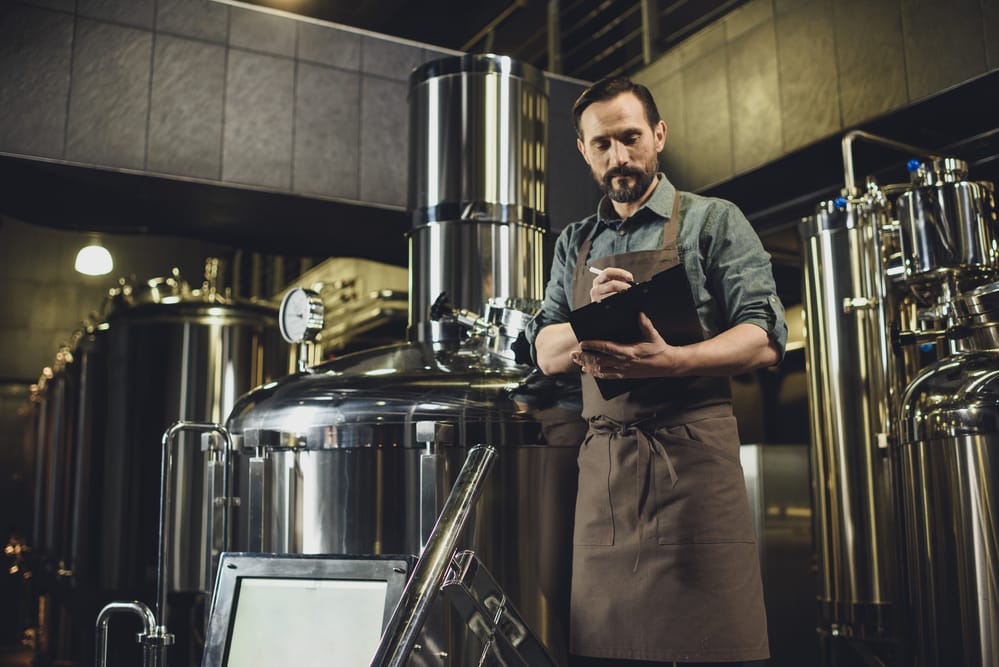
Brewery Insurance: Coverage Insights for Insuring Craft Breweries

In the past 30 years, the number of brewers in the United States has grown from under 100 to more than 2,400. Of these breweries currently in operation, almost 98 percent are considered regional craft brewers, microbreweries or brewpubs. With this continued trend, insurers have begun to offer more effective brewery insurance policies to address the unique exposures faced by this ever-expanding section of the industry.

Given their size and average output, the needs of craft brewers vary greatly from the larger, more traditional breweries. While larger breweries can primarily be described as manufacturing outfits, it is not uncommon for craft breweries to be run in conjunction with restaurants or pubs, often operating in the same location.

Selecting the Right Brewery Insurance Coverage

In addition to the general and property liability coverages that every New York craft brewery business should carry, the following policies help protect against common exposures faced by craft brewers:

  • Boiler and machinery coverage: Many smaller breweries are not able to handle the production interruption caused by the loss of a key piece of equipment. This coverage can help with repair or replacement costs for damaged equipment as well as cover losses resulting from production interruption and downtime.
  • Supply chain insurance: Many craft breweries do not keep large stocks of ingredients on hand, making regular shipments from suppliers essential. Supply chain insurance will cover losses resulting from decreased production or increased production costs in the event that one or more of your suppliers is unable to provide the materials you need.
  • Spoilage and product recall: If a batch of beer is contaminated during the brewing or packaging process or spoils before distribution, a provision for spoilage can cover the initial production cost as well as lost revenue. If a contaminated batch isn’t caught before shipping and the beer makes it to store shelves, coverage for product recall can help offset the costs of removing the tainted product and replacing it.
  • Liquor liability: Regardless of whether you have a full-service bar or offer beer tastings after tours, liquor liability is essential to cover damages to persons and property caused by patrons who were over-served at your establishment.

By mixing and matching these policies based on the unique needs of your operation, you can obtain maximum coverage at an affordable price. Some insurers offer these coverages in packages specifically for craft brewers that can be further tailored to address the needs of your individual operation. If your operation involves a restaurant or other type of food service, you will need to consider additional coverage for related exposures.

Brewery Insurance Program New York City

Work With a Brewery Insurance Expert

The world of craft brewing is rapidly expanding, and as it does insurers are becoming increasingly effective at identifying and addressing its diverse risks. New combinations and specially structured coverages are constantly being made available to brewers. By working with the experts at Enforce Coverage Group, you can be sure that you are being provided with the latest options in brewing coverage. Let us help you build a comprehensive package that will cover all of your exposures, no matter how unique. Request an insurance quote or call us today (212) 947-4298.

Source: Zywave


This Coverage Insight is not intended to be exhaustive nor should any discussion or opinions be construed as legal advice. Readers should contact legal counsel or an insurance professional for appropriate advice.

The post Brewery Insurance: Coverage Insights for Insuring Craft Breweries appeared first on Enforce Coverage Group.

Tuesday, June 19, 2018

Energy Conservation & Efficiency Tips

There are many things you can do in your day to day life and home and at work to save as much wasted energy as you can. There are some tips below that could help you save energy and become more energy efficient at the same time.

At Home

General
During winter, lower your thermostat to 68 degrees or lower. In the summer, set it to 78 degrees or higher.

Replace incandescent with energy-efficient compact fluorescent bulbs.

Use dimmers on existing incandescent bulbs.

Turn off TVs and lights when you leave the room or aren't using them.

Make sure your home is properly insulated to match standards based on your region, weather and construction design.

Kitchen
Dry items in your dishwasher simply by opening the door and not using a 'high temp' option.
Boil water in a pot on the stove instead of using a kettle.
Use smaller appliances such as the microwave or toaster instead of the oven.

Bathroom
Use a low-flow showerhead.
Take short showers instead of baths.
Install dual-flow toilets to reduce the amount of water used per flush

Basement
Insulate your water heater and all water piping.
Clean and replace your furnaces filter, and clean your ducts every few years.
Move items from your freezers/refrigerators to your cold room/cantina (if possible).At Work

Heating & cooling
Make sure all windows and doors are closed during off hours, and only open when necessary during open hours.
Consider using a heat recovery system, which can save up to 60%-70% of lost heat through your ventilation system through air-to-air exchange system.
Use sunlight instead of turning on the heat, where applicable.
Reduce air conditioner usage in summer.

Lighting
Open blinds and shades instead of turning on lights where you can.
Replace incandescent with energy-efficient compact fluorescent bulbs.
Use LED signage, monitors and holiday lights.
Use occupancy/motion sensors for areas of your office to automate when lights shut off.

Equipment
Turn all computers and network peripherals off at day end.
Use energy efficient devices and replace all CRT screens with LCD/LED.
Use a humidity control system to control your freezers or cold rooms by a few degrees.

Facilities
Check for leaks in you compressed air systems.
Take part in a recycling program and make sure all lighting, appliances and electronics are recycling if possible.
Consider start with a solar panel system, as it will provide long term energy efficiency.
Using energy efficient toilet and drainage systems can reduce wasted water from your building.

Your Vehicle

General
Try and carpool whenever you get the chance to reduce the number of cars on the road.
Make sure your tires are always filled with air, which increases movement efficiency.
Clear out all heavy items in your truck and backseat, so that you are not being weighed down.
Have regular maintenance on your vehicle to make sure that everything is working to the best performance.
In the long term, you may want to consider starting with a 'hybrid' or other fuel source vehicle, as it will significantly reduce your energy costs and emission output.

Winter
Installing winter tires will help increase movement efficiency and mileage, that way your vehicle is not working harder to push forward than it should.

Park your car in the garage (if possible) so that it is cleaned off and easier to drive than if it was in the snow.
Do not warm your vehicles up by turning on the heat and idling, as you waste gas and heighten the vehicle's emissions - simply driving right after turning on the ignition will warm the vehicle up just as well.
Find alternate routes to your destination, as spending time in traffic not only wastes gas, but will likely force you to use more heat.
When using the heat, try and regulate it throughout the vehicle and slowly turn it down over time or redirect it to the defogger (front and back) if needed.

Summer
Try not to drive faster than highway limits (55mi/h or 100km/h) as it causes you to lose your fuel efficiency.
Do not use the air conditioning on days where the wind or cooler air will suffice.
If you must use the air conditioning, try and have it regulate throughout the car and lower the temperate over time.

Everyday
Separate your recyclable and compost material from your garbage in order to reduce landfill waste.
When shopping, use the least amount of plastic bags possible or use recyclable bags that can be used over again.
Use products made of recycled (FSC) paper, or biodegradable materials.

Source: Energy Conservation & Efficiency Tips